Welcome to the official website of ZRC!
- Certificate query
- WeChat
 Follow WeChat
- Sitemap
- 中文版
Welcome to the official website of ZRC!
Follow WeChat
 Focus on battery product global certification testing
National Certification, Local Testing, Fast Certification

Service Hotline
0755-2851-1184

Current location: Home>News>Certification information
Hot Search:
Service Hotline
0755-2851-1184Phone: 17512023040
Fax: 0755-2851 1184
Mailbox: 1007962904@qq.com
Address: No.702, Hualian Industrial Zone, Xinshi community, Dalang street, Longhua District, Shenzhen
Editor:ZRC Category:Certification information Release time:2022-04-29 Click volume:2054
In order to regulate the electromagnetic compatibility of electronic products, all developed countries and some developing countries have formulated electromagnetic compatibility standards. Electromagnetic compatibility standards are the basic requirements for products to work properly in the actual electromagnetic environment. It is called a basic requirement, that is to say, even if the product meets the electromagnetic compatibility standard, interference may occur in actual use. Standards in most countries are based on standards developed by the International Electrotechnical Commission (IEC).
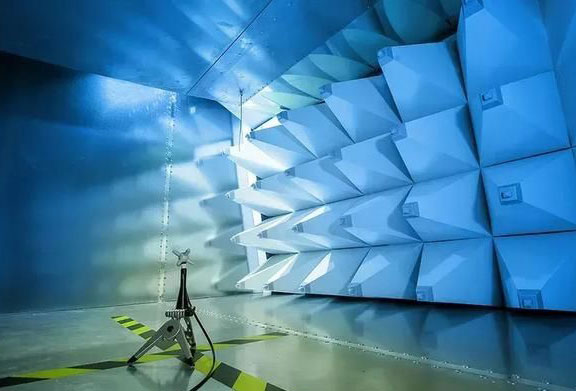
The IEC has two parallel organizations responsible for developing EMC standards: CISPR (International Special Committee on Radio Interference) and TC77 (Technical Committee 77). The standard number developed by CISPR is: CISPR Pub. XX, and the standard number developed by TC77 is IEC XXXXX.
China's civilian product electromagnetic compatibility standards are based on CISPR and IEC standards. Currently, 57 standards have been issued, numbered GBXXXX-XX, such as GB 9254-98.
The EN standards used in the European Union are also based on CISPR and IEC standards, and their correspondence is as follows:
EN55 ××× = CISPR standard
EN6 ×××× = IEC standard
EN50 ××× = custom standard
EMC standards are divided into basic standards, general standards, product standards, and special product standards.
Basic standards: describe the EMC phenomenon, specify EMC test methods, equipment, and define grade and performance criteria. Basic standards do not involve specific products.
Product standard: EMC test standard for a certain product series. Basic standards are often cited, but more detailed regulations are proposed based on the specificity of the product.
General Standard: According to the equipment use environment, when the product does not have a specific product standard that can be followed, use the general standard for EMC testing. To make the device fully functional, the requirements of these standards must also be met.
In order to make the product have good electromagnetic compatibility, it is necessary to specifically consider the design content related to electromagnetic compatibility. Electromagnetic compatibility design generally includes the following aspects.
1. Ground wire design: Many electromagnetic interference problems are caused by the ground wire, because the ground wire potential is the reference potential for the entire circuit work. If the ground wire is not designed properly, the ground wire potential will be unstable and cause circuit failure. The purpose of the ground wire design is to ensure that the ground potential is as stable as possible, thereby eliminating interference.
2. Circuit board design: Whether the equipment generates electromagnetic interference emissions or is affected by external interference, or mutual interference between circuits, circuit boards are the core of the problem, so designing good circuit boards is important for ensuring the equipment's electromagnetic compatibility. significance. The purpose of the circuit board design is to reduce the electromagnetic radiation generated by the circuit on the circuit board and the sensitivity to external interference, and reduce the mutual influence between the circuits on the circuit board.
3. Filter design: For any device, filtering is one of the key technologies to solve electromagnetic interference. Because the wires in the device are highly efficient receiving and radiating antennas, most of the radiated emissions generated by the device are achieved through various wires, and external interference is often first received by the wires and then stringed into the device. The purpose of filtering is to eliminate these interference signals on the wires, prevent the interference signals in the circuit from being transmitted to the wires, and prevent the interference signals received by the wires from passing into the circuit by means of the radiation of the wires.
4. Shielding and overlap design: For most equipment, shielding is necessary. Especially with the increasing frequency of circuit operation, the design of circuit boards alone often cannot meet the requirements of electromagnetic compatibility standards. The shielding design of the chassis has many differences from the traditional structural design. Generally, if the electromagnetic shielding requirements are not considered in the structural design, it is difficult to add the shielding effect to the chassis. Therefore, for the design of modern electronic products, the issue of shielding must be considered from the beginning.
本文链接:http://www.zrc-lab.com/certification-information/380.html
ZRC--Focus on battery product global certification testing,转载请注明出处。

Focus on Wechat
Public Number